
If water is coming through a ceiling or soaking a wall right now, the next day or two matter more than anything else. Our La Puente mitigation line runs 24/7. Until the crew gets there, close the main valve, get valuables up off wet floors, and keep kids and pets clear of anything that looks dirty. Flip the breaker for a soaked room only when a dry panel is within easy reach.
Mitigation is the stop-the-damage phase, not the rebuild. Crews find the wet material, pull out what cannot be saved and start drying before swelling, staining and mold take hold.
Wet wall, spreading ceiling stain or musty smell? That is a mitigation job
A wall that feels cool and damp, a ceiling stain that grew overnight or a musty smell in a closet usually means water is still moving through the building materials. Painting over it or running a box fan rarely reaches the moisture trapped in drywall paper, insulation and framing. The trade that handles this is called water mitigation, and it means locating the wet areas with meters and thermal imaging, then drying them on purpose.
When water is still spreading in your home
Active water changes the order of work. The source comes first, whether that is a supply line, a washing machine hose, a water heater or a roof leak, and the main valve or a plumber handles that part. After that the mitigation clock is running, because wet drywall and carpet pad start to break down within a day or two.
Electrical and sewage risk
Water and electricity are a dangerous mix, so check the room before you step into it.
- Stay out of any room where water is touching outlets, a panel or a dripping ceiling light fixture.
- The breaker for a wet room is safe to flip only if the walk to the panel stays dry.
- A gas smell or sparks from an outlet means get outside and phone 911 or the utility first, then us.
- Treat water from a toilet, drain or sewer line as contaminated and keep children and pets out.
Crews can often come the same day if one is free, and a call at 2 a.m. gets the same handling as one at noon. Pipes fail at midnight and on holiday weekends, so the dispatcher asks where the water started and which rooms are wet, then sends the crew whose equipment fits the job.
Why the first 24 to 72 hours decide the outcome
Drywall, carpet pad and wood framing soak up water quickly and release it slowly. EPA guidance sets a one-to-two-day target for drying soaked materials, because mold needs little time to start, so the whole job is counted in days rather than weeks. By day three, soft materials such as ceiling insulation and particleboard cabinet bases are often past saving.
Roughly six in ten La Puente homes (60.4 percent) are lived in by their owners, which means the repair bill usually falls on whoever holds the deed. That makes early records worth your time. Photograph the source and the wet areas before anything is removed, and write down when you first noticed the water, because your insurer will ask.
Structural drying
Structural drying starts with moisture meters pressed against drywall, baseboards, subfloor and studs, followed by a thermal imaging camera that shows cool, wet patches behind paint. The crew sketches where the water went, because it often travels well past the visible stain.
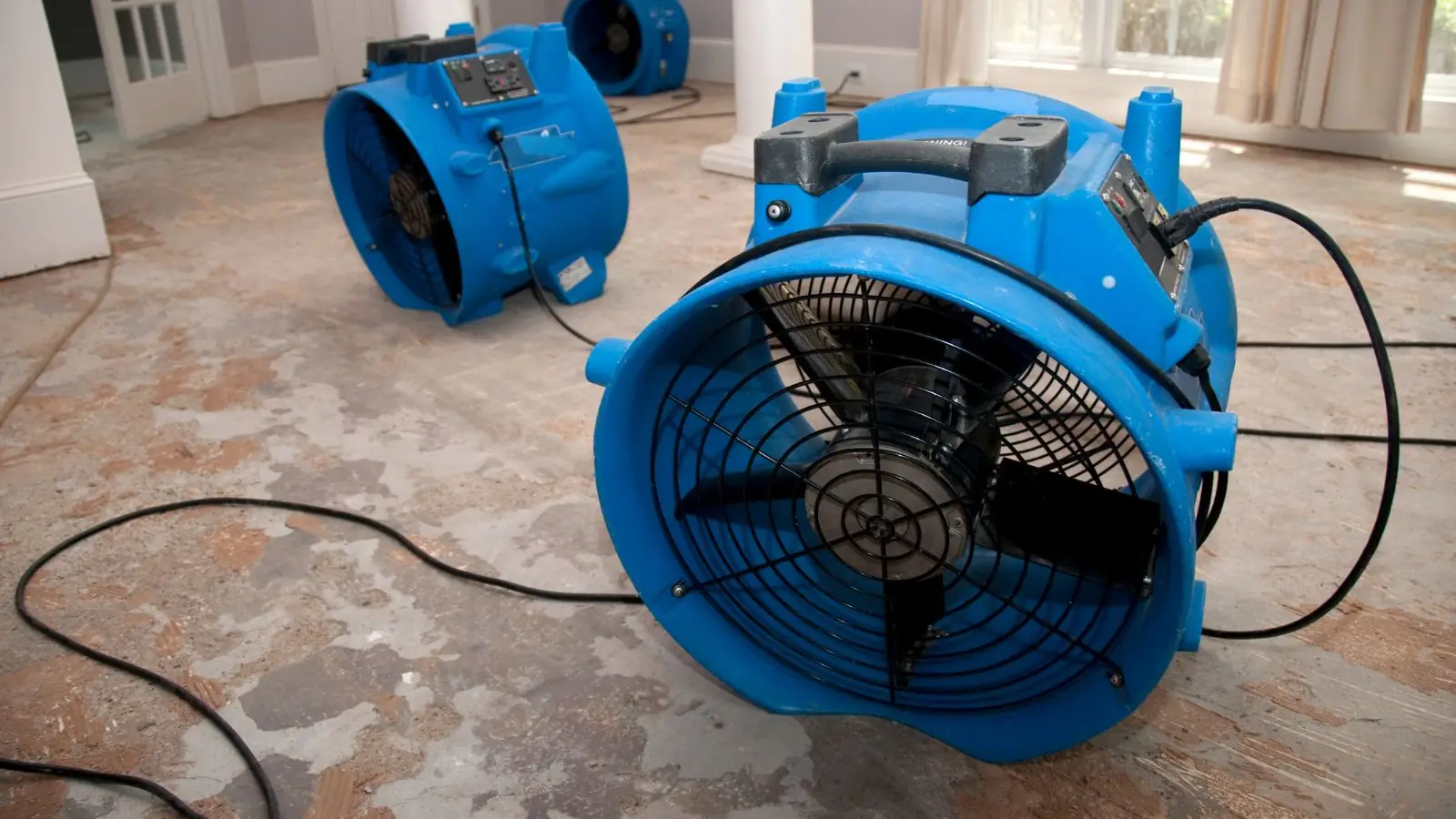
Air movers push dry air across wet surfaces to pull moisture out, and LGR dehumidifiers capture the vapor so it does not simply settle somewhere else in the house. The equipment works as a closed system, which is why windows stay shut during drying. Small holes behind baseboards or a floor mat can let air reach wall cavities and the space under flooring.
A technician returns daily to take new readings and reposition equipment. Drying is finished when readings match a dry reference taken from an unaffected room with the same material, usually three to five days for a small or moderate loss and longer for saturated subfloors. ANSI/IICRC S500 is the published drying and restoration standard, and you are free to ask a contractor if its technicians follow it.
The first 72 hours, step by step
Day one, stop and extract
The source is isolated and standing water is removed with portable or truck-mounted extraction units, so the structure stops soaking.
Day one to two, remove the unsalvageable
Sagging ceiling drywall, saturated pad and wet insulation come out, because drying them costs more time than replacing them.
Day two to three, set the drying system
Air movers and LGR dehumidifiers go in, sized to the cubic footage and the amount of wet material the meters found.
Day three onward, monitor
Daily readings show whether each surface is trending toward dry, and equipment is moved or removed as each area reaches its target.
What gets dried and what gets removed
| Material | Often dried in place | Often removed |
|---|---|---|
| Drywall | Intact, clean-water wall caught within a day or two | Sagging, crumbling or sewage-exposed sheets |
| Carpet and pad | Carpet from a clean source, lifted and dried | Pad, almost always |
| Hardwood floor | Boards that have not yet cupped, dried under mats | Buckled or heavily cupped boards |
| Ceiling insulation | Light, dry fringes | Wet batting that holds the weight of water |
These are starting points, not rules. A meter reading and a look at the material decide each case,.
Where mitigation ends and other work begins
Mitigation is finished when the structure is dry. Rebuilding drywall, paint and flooring belongs to water damage repair, pumping out standing water right away is emergency water removal, and hauling out dirty-water debris is water damage cleanup. If moisture lingers and a musty smell appears, mold remediation is a separate step that follows the leak being fixed.
We are honest about limits. Mitigation is not waterproofing, plumbing repair or foundation repair, so a failing pipe still needs a plumber, and moisture wicking up through a slab is a different problem from a one-time leak.
What affects the cost of water mitigation
| Factor | Why it changes the price |
|---|---|
| Water category | Dirty water adds protective gear and removal of more material |
| Affected square footage | More wet area means more extraction and more equipment |
| Materials involved | Hardwood and plaster dry slowly, while carpet pad is simply removed |
| Drying days and equipment | Each air mover and dehumidifier is logged for the days it runs |
| Rebuild scope | Tear-out leaves openings that repair work then closes |
A pipe that bursts without warning is the kind of loss homeowners policies commonly cover, whereas a slow drip left alone for months usually is not. Rising outside water sits in a different bucket, and the NFIP or a private flood policy is where that coverage lives. Check your own policy wording with your insurer, and save receipts for the emergency work.
Nothing gets priced in the dark, because the dispatcher walks you through how the job will be scoped and charged ahead of any tear-out. Ring (626) 879-0276 for a figure of your own, name the wet rooms and the leak source, and ask what the assessment visit covers.
Water in the walls does not wait
Phone (626) 879-0276 with three facts: which materials are wet, what let the water in, and how many hours or days it has soaked.
Water mitigation across La Puente
La Puente covers about 3.5 square miles and is mostly residential, so your home sits close to its neighbors and a leak in a shared wall or a long sprinkler line can cross property lines. When you call, give the nearest cross street, such as Main Street or Glendora Avenue, so dispatch can place the address without back and forth.
If water came back up a floor drain or toilet, the cause may be your private lateral or the street main. With 63.2 miles of city sewer under the streets, a backup hitting several neighbors points to the main and should be reported, while a single-house problem more likely lives in your own lateral. Either way, treat it as contaminated until it has been cleaned.
Because San Jose Creek belongs to the area's geography, remember that creek overflow or runoff across the ground counts as flood rather than a plumbing failure, and your FEMA map lookup and policy decide how it is treated. La Puente also has walnut grove history, and mature trees on older lots can send roots into shallow sewer and irrigation lines.
Before you rebuild, ask the city Building & Safety division about permit rules for any electrical, plumbing or structural work. Crews also cover Baldwin Park, West Covina and Hacienda Heights.
Frequently asked questions
My wall feels wet but I cannot see a leak. What should I do?
Shut off the main water valve and check whether the wall dries or the damp spot keeps growing. A hidden supply line, a shower valve, a drain or roof moisture can all wet a wall without any visible drip. When you call, point out the damp spot. Before any drywall is cut, the technician scans it with moisture meters and a thermal camera to outline the wet zone.
Do you handle water mitigation emergencies at night or on weekends in La Puente?
Yes. Calls are answered overnight, on weekends and on holidays, and if a crew is open you may get same-day service. No arrival time is guaranteed, though the dispatcher gives you interim steps while the truck is en route.
How long does structural drying take?
A small or moderate loss often needs three to five days of equipment running, with daily readings. Thick framing, plaster and saturated subfloors can take longer. Drying is complete when the readings match a dry reference, not when the surface feels dry to the hand.
Can I just rent fans and a dehumidifier myself?
You can, but the equipment is only part of it. Without a meter, you do not know whether wall cavities and subfloors are dry, and without balanced air movement the moisture may just move to another room. Hidden wetness is what turns into mold later.
How is the price for mitigation set?
The quote is built from the water category, the wet square footage, the materials involved and how many days the equipment runs, and it is laid out before any work begins. Prices depend on what the meters find, so a phone description gives only a range of possibilities. Call (626) 879-0276 for your real number.
Will my homeowners policy pay for mitigation?
Often yes for a sudden break, often no for a slow leak that went unrepaired, and flood needs its own policy. Compare that against your declarations page, ask your insurer, and hold on to photos and receipts. We do not promise any claim outcome.