
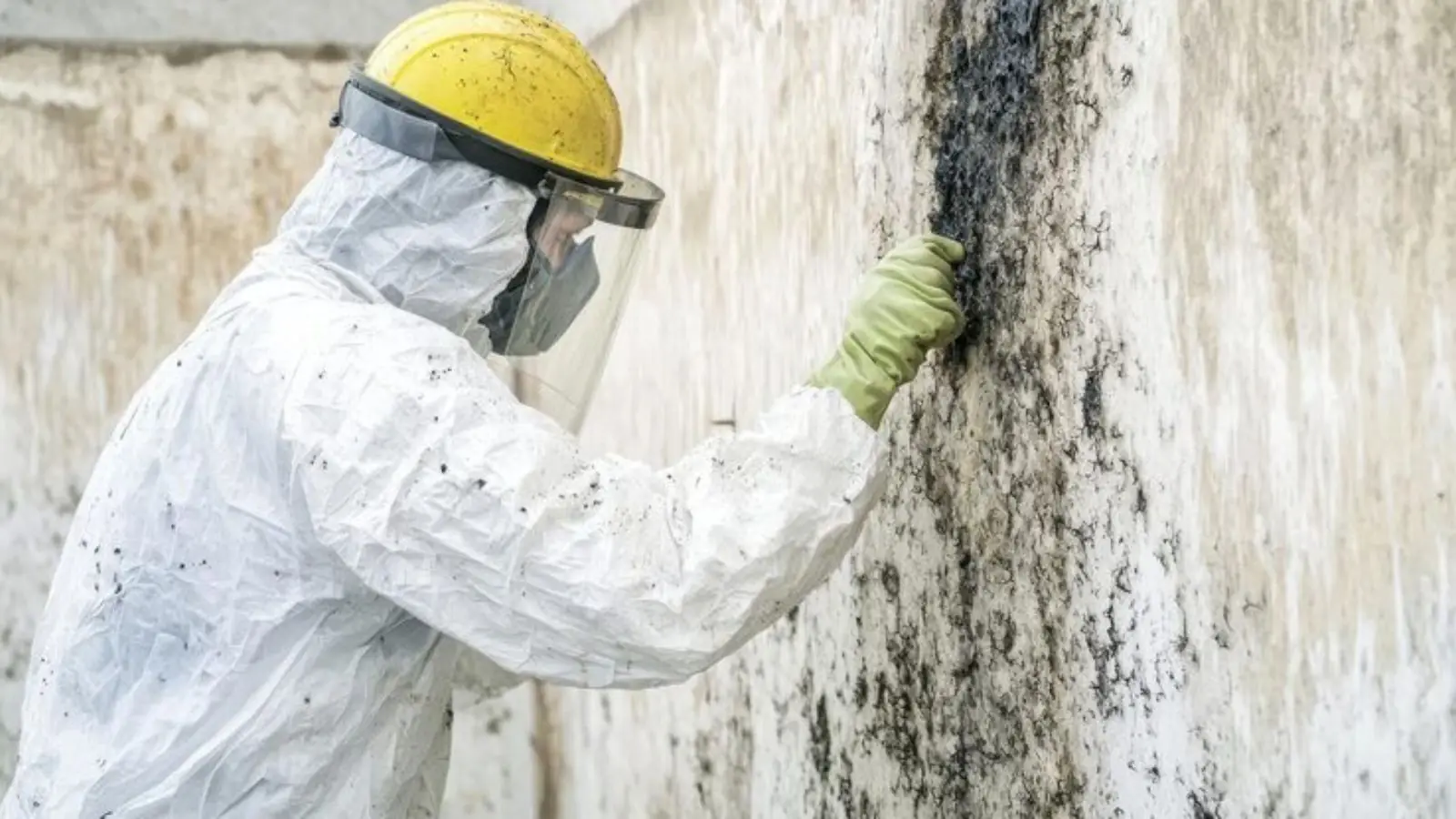
Mold remediation in La Puente starts with moisture, not with a spray bottle. Mold grows where materials stay damp, so the job is to find the water source, have it repaired, then contain and remove what mold has colonized.
Jobs run inside sealed containment, with HEPA air scrubbers and negative air, using practices from the published ANSI/IICRC S520 standard. Before anything is opened, (626) 879-0276 is the number for a straight answer on what the job covers and costs.
My wall is stained and smells musty. What is going on?
A dark patch on drywall, a ceiling stain that keeps spreading, or a damp smell in a closet or under a sink all point to the same thing: moisture has been sitting somewhere longer than it should. If you can see or smell it, the material behind it is usually wetter than the surface suggests. Mold remediation exists for exactly this, and the first tools out are a moisture meter and a thermal imaging camera rather than a guess.
Where mold usually starts in a La Puente home
La Puente is a small, mostly residential city of about 3.48 square miles, so most of our mold calls come from houses, duplexes and apartments with ordinary plumbing and roofs. The pattern is almost always a recent or slow leak. Typical culprits are a toilet supply line or wax ring, a sink drain, an air conditioner condensate line, a roof leak after rain, or siding that lets water behind the wall.
Owner-occupied homes make up about 60.4 percent of housing here according to the Census, which means many repairs are the homeowner's decision and timing. A leak you fix this week costs far less to dry than one you notice after the paint bubbles. If the same spot is wet every time it rains or every time the AC runs, that is a pattern to report to whoever owns the roof or the unit.
Before any remediation, the leak must be fixed. Removing mold from a wall that is still getting wet only resets the clock, and no honest contractor can promise mold will not return in a space that stays damp.
Signs that a leak has turned into a mold problem
- A musty or earthy smell that gets stronger when a room is closed up
- Paint that bubbles, peels or looks stained near a pipe, window or ceiling
- Drywall that feels soft, swollen or cool and damp to the touch
- Dark, fuzzy or speckled patches on walls, baseboards or inside cabinets
- Water stains that grow after rain, or after a shower or AC cycle
- Warped baseboards or flooring along an exterior wall
Color alone does not tell you what a growth is. Black, green and white growth can look similar, and only a lab test can identify a species. What matters for the work is the same in every case, which is how much material is affected and how wet it is.
Health questions belong to a physician. We do not diagnose, and we do not make medical claims about what mold may or may not do to anyone in your home.
Mold removal and black mold cleanup
"Black mold" is a common search phrase, but the remediation steps are the same regardless of color. Crews isolate the work area with plastic sheeting and set up negative air containment so air flows into the containment and out through a HEPA filter, not into the rest of the house. HEPA air scrubbers run throughout the job to capture airborne particles.
Porous materials that are visibly colonized, such as drywall, insulation and carpet pad, are cut out, bagged and removed. Semi-porous and solid surfaces like framing are cleaned using HEPA vacuums and damp wiping, and sanded or wire-brushed only when the containment is set. Everything is dried with air movers and LGR dehumidifiers until moisture readings return to normal.
Spraying bleach or a coating over a stain hides it but does not remove what is growing underneath. The point of containment and removal is to take the material out of the house without spreading it into clean rooms, so avoid disturbing the area with a fan or a dry scrub brush before the crew arrives.
For small spots on hard, non-porous surfaces like tile, a homeowner can often wipe the area with detergent and water. Larger areas, anything on drywall, and anything after a sewage or flood event is a job for professionals. When a loss started with sewage or storm water, our flood damage restoration page explains how that water is handled first.
Mold after water damage
The EPA puts the safe drying window for wet materials at one to two days, which is short, which is why drying right after a leak, appliance failure or storm matters so much. Once a wall cavity, subfloor or ceiling stays wet past that point, growth can start inside it where you cannot see it.
If your loss is recent, the best way to avoid needing remediation is fast drying. Our water mitigation service covers the first 24 to 72 hours, using extraction, air movers and dehumidifiers to dry structure before mold has a chance. Standing water that is still present should come out first through emergency water removal.
If the water sat for days or the drying was incomplete, remediation can follow mitigation as a separate scope. Ask whoever dried the structure for their final moisture readings, since those numbers show whether wall bases, framing and the subfloor reached normal levels before they were closed up.
After mold removal, the repair work follows. Replacing drywall, insulation, trim and flooring is covered under water damage repair.
Mold testing and clearance for a home sale or loan
Buyers, sellers and lenders sometimes ask for documentation that mold was addressed. In that case, there are two different roles. The remediation crew removes mold and dries the space. A separate, independent assessor, who does not do the remediation, collects samples and writes a report after the work.
Clearance testing usually means a visual inspection, moisture readings and air or surface samples compared with an outdoor sample taken on the same day. The result is a report you can hand to a buyer, agent or lender. Independence matters because the person who sold you the cleanup should not be the one grading it.
Lenders, buyers and agents each set their own rules, so acceptance of any report is outside our control. Ask the party requiring documentation exactly what they need before you schedule anything. If a transaction is on a deadline, call early so drying, removal and testing can be scheduled in the right order.
Also ask whether your state licenses mold work and what credentials any assessor holds, since requirements can change. A reputable company will answer plainly.
How mold remediation is assessed, contained and finished
Inspect and find moisture
A moisture meter and thermal imaging camera map wet and affected areas.
Fix the source
The leak is repaired by a plumber, roofer or HVAC technician before cleanup.
Contain and remove
Plastic barriers, negative air and HEPA scrubbers isolate the work while affected materials come out.
Clean, dry and verify
HEPA vacuuming, damp wiping and drying finish the job, followed by optional independent clearance.
S520 is public, so a contractor's answer on whether it applies is easy to get. Useful follow-ups cover how containment is built, how air is filtered and what paperwork arrives at the end. A plain written scope should list rooms, materials removed and drying readings.
DIY cleaning versus professional remediation
| Situation | Reasonable approach | Why |
|---|---|---|
| Small spot on tile or a glazed surface | Detergent and water, then fix the moisture source | Hard surfaces do not absorb growth |
| Growth on drywall, ceiling or insulation | Professional removal in containment | Porous material hides growth and spreads when disturbed |
| Mold after sewage or storm water | Call a crew experienced with Category 3 water | Contaminated materials need safe removal |
| Musty smell with no visible source | Moisture inspection first | Hidden wet framing is common |
If the area is larger than a few square feet, or you are unsure how deep it goes, a short assessment saves money. Permit questions for rebuilding work are best asked of the city building department, which issues building, electrical and plumbing permits in La Puente.
What affects the cost of mold remediation
Pricing depends on facts about your house, so a reliable number only comes after someone looks. The main factors are below.
- Affected square footage and how many rooms are involved
- Materials, since drywall removal costs differ from framing cleaning
- Containment needs, including HEPA air scrubbers and negative air days
- Drying time and equipment needed to bring moisture to normal
- Whether independent clearance testing is required
- Rebuild scope after removal
Insurance may cover mold that results from a sudden, accidental water loss, while mold from a long-term leak or neglect is often excluded. Your policy language and agent decide that, and photos plus receipts support whatever you file. We cannot state what any claim will pay.
A price for your own home starts with a call to (626) 879-0276, where you tell us what is visible, the likely water source and which materials are involved.
Musty smell or visible growth?
Call (626) 879-0276 to talk through the leak, the affected rooms and the next step.
Serving La Puente and nearby towns
Crews leave from 1801 N Hacienda Blvd in La Puente to cover ZIP codes 91744 and 91746, and they travel to Baldwin Park, West Covina and Hacienda Heights as well. Same-day response is available when schedules allow.
Frequently asked questions
My wall has a dark stain and smells musty. Is that mold?
It could be, but color alone cannot confirm it. A stain together with a musty odor points to moisture, so a moisture reading comes first to trace the water. Remediation is planned after the source is known.
Why did mold come back after I cleaned it?
Most often the moisture source was never fixed. Mold needs damp materials, so if a leak, condensation or humidity remains, growth can return. No one can promise mold will not return, but fixing the leak and drying the structure give the best odds.
Do I need to fix the leak before remediation?
Yes. The leak must be repaired first, whether it is a toilet, sink, AC condensate line, roof or siding. Otherwise the new materials get wet again.
What is the S520 standard?
ANSI/IICRC S520 is a published industry standard for mold remediation. Asking a contractor whether the crew uses it, and how it shows in containment and records, is a fair test.
Do I need mold testing before a home sale or loan?
That depends on what the buyer, agent or lender requires. Independent clearance testing after remediation produces a report, but we cannot promise any party will accept it, so ask what they need first.
Does insurance cover mold?
Sometimes, if it results from a sudden and accidental water loss. Gradual leaks and neglect are often excluded. Your agent and your policy wording settle it.
How fast should wet materials be dried?
Wet materials should be dry inside roughly two days, the EPA says. If longer has passed, call for a moisture inspection.