
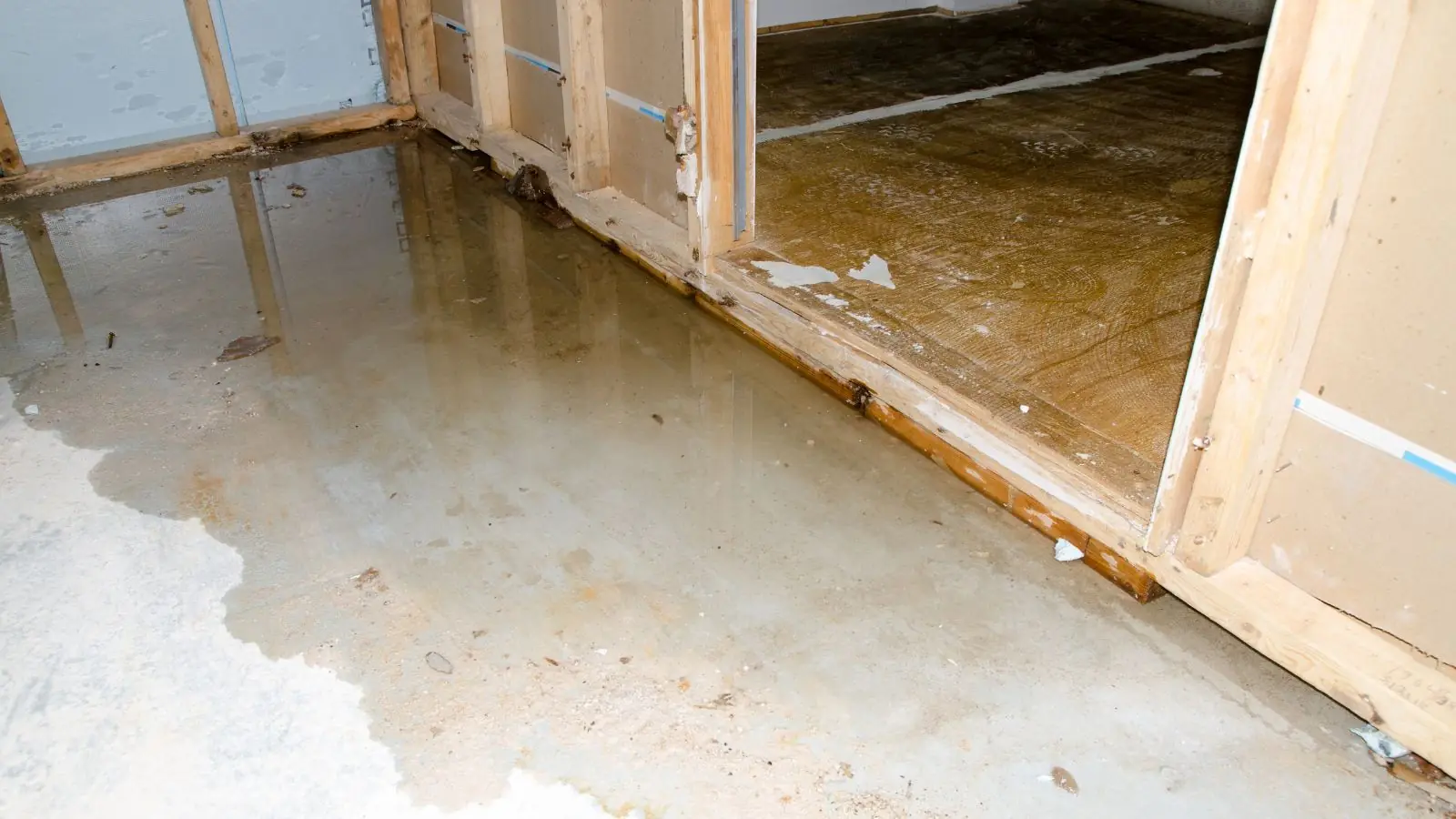
If you need water damage restoration in Hacienda Heights, CA, the first hours decide how far the damage spreads. Wet drywall, soaked subfloor and saturated insulation can start growing mold within 24 to 48 hours, according to EPA guidance. Our crews are dispatched from La Puente, just north along Hacienda Boulevard, and the line is answered 24/7.
This page covers how water reaches homes in this hillside community, what to do while you wait, and which services usually come first.
Winter storms and hillside runoff in the Puente Hills
The county community plan flags slopes steeper than 25 percent across the southern part of Hacienda Heights and along its western hills, which are part of the Puente Hills. The same plan says development in landslide and flood risk areas is to be restricted. For a homeowner, that means a hillside lot can send runoff toward a garage, a side yard or a downslope wall, so check where the ground drains before the rain starts.
Three homes near Gotera Drive were evacuated in 2024 after a hillside gave way, and press accounts describe a closed stretch of Hacienda Road where the storm had undercut the pavement. A heavy storm can move soil and water in ways a gutter cannot handle. If mud or runoff is heading for your home, keep your distance and call 911 if anyone is at risk before you call us.
Storm water that enters a home is Category 2 or 3 under the standard IICRC water categories. It has crossed soil, yards and driveways, so it can carry silt, fuel residue and bacteria. Carpet, pad and wet drywall that touched it are usually removed rather than dried in place, and the cleanup follows the practices in flood damage restoration.
When water is spreading in Hacienda Heights
Water on the floor is an emergency when it keeps coming, reaches outlets, or sits in a room people use. Stop the source first. If a pipe or fixture is the culprit, the main water valve is typically on the street side of the house or against the garage wall.
Power is the next worry. Wiring or a gas smell near the water means staying out and calling 911 or the utility first. After that, dial (626) 879-0276 and report what is wet, how far it reaches and whether the water looks clean or murky.
Night calls are dispatched exactly like daytime ones. Once a crew arrives, emergency water removal begins with extraction, using truck-mounted or portable units to lift standing water ahead of any drying.
Dry-season causes inside the walls
Not every loss in Hacienda Heights comes from a storm. The county plan describes homes built from the 1950s onward, with early subdivisions around Kwis Avenue, so many houses have decades-old supply lines, water heaters and shutoff valves. An aging water heater tank that lets go can put a few dozen gallons across a hallway in minutes.
The usual dry-season culprits are:
- Supply lines and braided connectors under sinks and behind toilets that crack or weep for weeks before anyone notices.
- Water heaters in garages and closets, where a corroded tank or failed relief valve drains into the slab edge and drywall.
- Irrigation lines and sprinkler heads set close to a foundation, which can soak stucco and sill plates.
- AC condensate lines that clog and overflow into an attic or a ceiling below the air handler.
Services ranked for Hacienda Heights homes
Based on how water gets into hillside homes here, this is the order most calls follow:
Flood and storm damage
Category 2 and 3 water from runoff, with removal of affected materials and sanitizing.
Emergency water removal
Extraction of standing water from floors, garages and lower rooms right away.
Water mitigation
Air movers, LGR dehumidifiers and monitoring to stop damage in the first 24 to 72 hours.
Water damage repair
Rebuilding drywall, flooring and paint once readings confirm the structure is dry.
Mold work, handled under mold remediation practices that follow the published ANSI/IICRC S520 standard, is the fifth step when drying started late. Mold needs moisture, so the leak or storm entry point has to be fixed first. Both S500 and S520 are published, so a contractor can be asked directly whether it follows them.
Before We Arrive
Before We Arrive
Hillside homes add a few wrinkles, so these four steps lean toward runoff and slick ground.
Stop the source
Close the main or the fixture valve. If storm water is the source, clear leaves from the nearest drain and steer runoff from the door, but only where the ground is stable.
Power off wet areas
Leave breakers alone if the panel is damp or the garage floor is wet around it. A dry, reachable panel is the only case for switching off wet rooms, and 911 covers the rest.
Lift what you can
Furniture legs go on foil or blocks, rugs come up, and electronics, papers and photos move to a dry room upslope or upstairs.
Keep people and pets out
Runoff and sewage carry contamination, so children and animals stay back. The line at (626) 879-0276 is staffed all night.
Hacienda Heights at a glance
Emergency dispatch
Emergency dispatch available around the clock, sent from La Puente.
Housing
Owners occupy roughly 75.5 percent of homes, so callers are mostly handling their own policy and repair decisions.
Main corridors
Hacienda Boulevard, Colima Road, Azusa Avenue and Gale Avenue are the commercial corridors named in the county plan.
Our base at 1801 N Hacienda Blvd in La Puente sits on the same boulevard that runs through this community, which is why a Hacienda Heights call is a short drive south. The higher homes near the hills may take a little longer when roads are slick, so tell the dispatcher your cross streets.
ZIP codes, county rules and who to ask
Hacienda Heights uses ZIP 91745. Rowland Heights, with its own ZIP 91748, adjoins the community on the east and is a separate place. Addresses close to the Rowland Heights line are worth a quick call to confirm.
Hacienda Heights is an unincorporated community, so the county, not a city, handles land use. For permit questions on rebuilding, ask the county. Fire code review is done by LA County Fire, which matters if repairs touch a wall near a hillside brush zone.
The county plan also says new development must show the Los Angeles County Sanitation Districts that sewer capacity exists. If a sewer line backs up, that is a public-versus-private line question, so ask the sanitation district or a plumber before assuming fault. Flood risk is a map question, and the FEMA viewer answers it by address. Ordinary homeowner policies tend to leave flood out, which is where NFIP or private flood coverage comes in.
If you are weighing a broader job, our teams also cover Baldwin Park and West Covina, and the home base is described on the main La Puente page.
A hillside home and its neighbors
The county plan references the Puente Hills Landfill Native Habitat Preservation Authority and the Sycamore and Turnbull Canyons Significant Ecological Area. These open areas matter because water moves downhill through them toward streets and lots. Peter F. Schabarum Regional County Park on Colima Road, with its 575 acres, is another large open space where runoff can build.
Water in your Hacienda Heights home?
Call (626) 879-0276 and talk to the 24/7 dispatch line now.
Frequently asked questions
Do you cover every ZIP code in Hacienda Heights?
Hacienda Heights is served under ZIP 91745, and we cover it fully. Rowland Heights (91748) adjoins the community to the east and is a separate place. La Puente ZIPs 91744 and 91746 sit to the north, and our crews are based there. An address outside that list still deserves a call to (626) 879-0276, since coverage can be settled by phone.
Is emergency water removal available in Hacienda Heights?
Yes, around the clock. Ring (626) 879-0276, say what is wet, and a crew is arranged, often the same day. Pumps come first (truck-mounted or portable), and drying gear follows.
Is storm runoff in my home considered contaminated?
Yes, it is treated as Category 2 or 3 water, because it crosses soil and yards. Porous materials that it touched, such as carpet pad and low drywall, are usually removed and replaced rather than dried.
Will insurance pay for storm or flood water in my house?
It depends on the cause and the policy. A burst heater tank and rising runoff are treated differently. The first is commonly covered, while the second generally falls to a separate NFIP or private flood policy. Your agent can read the wording with you.
Who handles building permits in Hacienda Heights?
Hacienda Heights is unincorporated, so the county, not a city, is the authority. Ask the county before starting rebuild work that may need a permit.
How long does drying usually take?
Three to five days is common with air movers and LGR dehumidifiers, though category, materials and room size shift that. Readings from moisture meters, not the calendar, mark the finish line.
How do I know whether I have a hidden leak?
Watch for stains, a musty smell, peeling paint or a rising water bill. Pinpointing the wet spot without opening the wall takes moisture meters plus an infrared camera.