
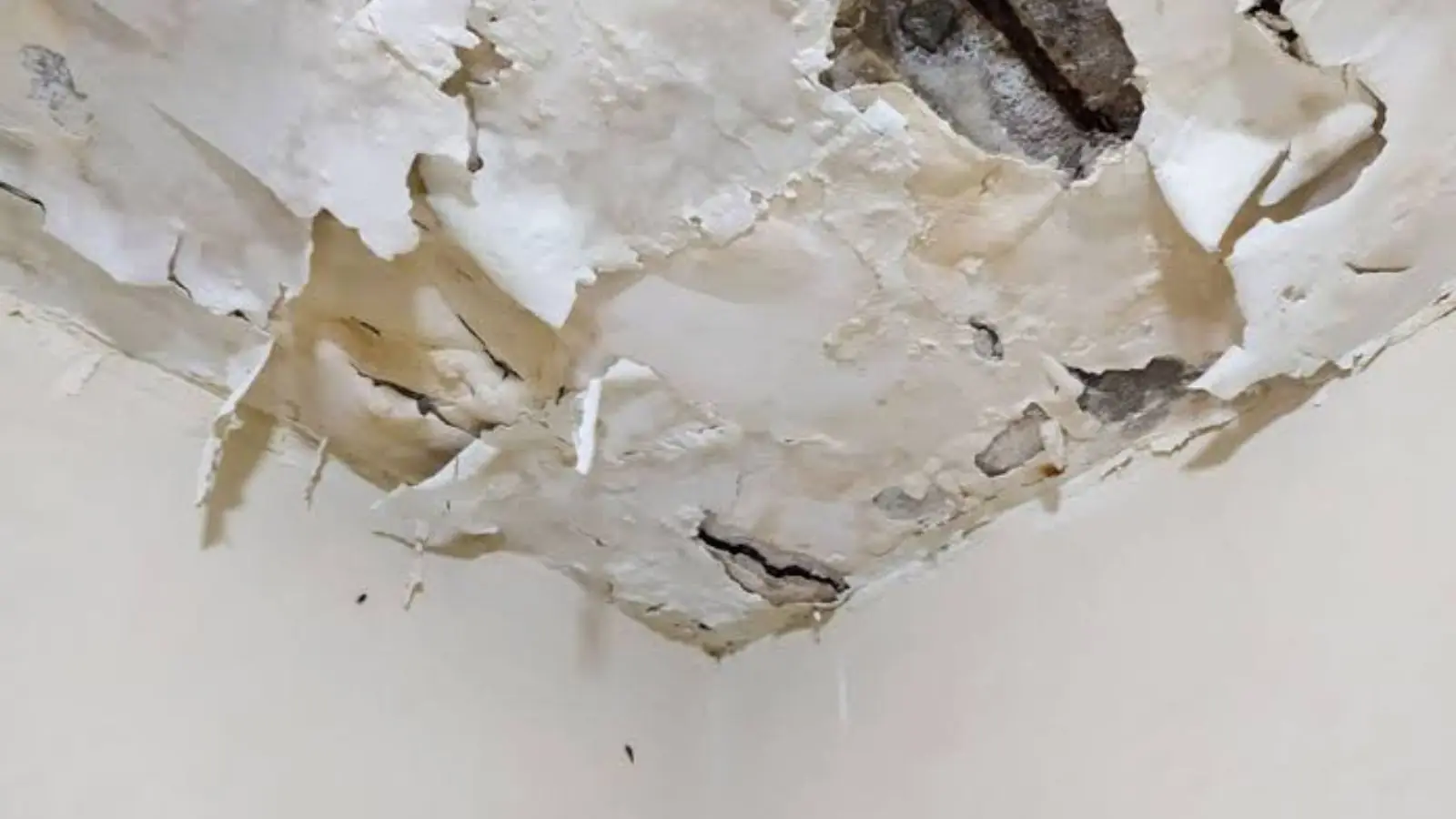
Water damage ceiling repair only makes sense after the water has stopped and the ceiling has dried all the way through. A stain that looks dry on the surface can still hold moisture in the drywall paper and the insulation above it. Once a moisture meter confirms the material is dry, you can choose between a patch and a full replacement.
This guide covers that second stage. If water is still dripping or the ceiling is sagging, start with emergency water removal and come back here after drying.
Confirm the ceiling is actually dry first
Drywall that feels dry to the hand can still read high on a pin-type moisture meter. Crews also scan the ceiling with a thermal imaging camera, because a cool patch often marks trapped wetness above the surface. Closing a ceiling over damp material is how a one-room repair turns into a second repair.
Mold can start in a wet ceiling cavity inside two days, which is why the EPA sets 24 to 48 hours as the drying target. If your ceiling stayed wet longer than that, treat the repair as a possible mold question as well and read the guidance in mold remediation before cutting or sanding anything. Sanding moldy or wet drywall spreads dust through the house.
Check the attic or the space above the ceiling too. Wet insulation holds water for days and can keep feeding a stain after the visible drywall looks fine. Pull back a few batts and compare readings across the joists.
Patch or replace: how to decide
The choice depends on how the drywall behaves, not on how the stain looks. Brown rings can be primed over once the source is fixed, but soft, sagging or crumbling board has lost its strength. The table below shows how crews usually sort the two paths.
| What you see | Usual path | Why |
|---|---|---|
| Dry stain with firm board, no sag | Stain-blocking primer and repaint | The drywall still holds its shape, so only the surface is cosmetic |
| Small soft spot or a cut-out hole | Cut to clean edges and patch | A new piece can be taped and mudded into sound board around it |
| Bubbled or peeling paper over a wide area | Replace the affected sheet or section | Wet paper facing rarely re-bonds, and a patch tends to ghost through paint |
| Sagging, cracked or crumbling board | Remove and replace down to the joists | Weak board can fall, and the insulation above needs a look |
| Wet more than 48 hours or visible growth | Pause and assess for mold first | Containment and removal come before any rebuild |
When in doubt, the safer call is replacement of the full sheet section. A patch that is too small leaves wet fibers at its border and shows as a ring after the first coat of paint.
How a drywall ceiling patch is built
Ceiling patches are harder than wall patches because gravity works against the mud. The work usually follows the sequence below.
Thin coats matter. One thick coat shrinks and cracks as it dries, and a ceiling shows every ridge under side light from a window. Crews dispatched from La Puente also work nearby in Hacienda Heights and Baldwin Park, so ask whether your address is covered.
Thin coats matter. One thick coat shrinks and cracks as it dries, and a ceiling shows every ridge under side light from a window.
Matching ceiling texture
Many ceilings in older single-family homes carry a spray texture such as popcorn or knockdown. Matching it takes a sample of the existing pattern, the right spray gun or aerosol, and practice on scrap board. A mismatch is more noticeable than a small stain.
If a ceiling was sprayed before the late 1970s, ask a testing lab about asbestos before any scraping or sanding. That is general building guidance, and a licensed professional can point you to a lab. When the whole ceiling will be re-textured, a skim coat or a fresh knockdown pass hides edges and gives one uniform surface.
Priming and painting
Use a stain-blocking primer, not ordinary wall paint, on any area that held a water stain. Without it, tannins and minerals bleed through and a brown ring returns within days. Prime the full patch and a few inches past its edge.
Finish with a flat ceiling paint rolled in one direction, then cross-rolled lightly. Paint the entire ceiling plane from wall to wall instead of spot painting. Spot paint dries at a different sheen and reveals exactly where the repair sits.
Ceiling repair checklist
- Moisture meter readings taken at the stain and a few feet past its edge
- Attic or upper-floor space inspected and wet insulation removed
- Source of the leak fixed and tested (roof, supply line, drain or AC condensate line)
- Photos taken before any cutting, for your records and any claim
- Light fixtures, fans and wiring checked by an electrician if they were wet
- Patch or replacement scope written down before work begins
- Stain-blocking primer chosen, plus texture matched to a sample
When to call a contractor
A single small patch on a dry, firm ceiling is within reach of a careful homeowner. Larger areas, sagging board, wet wiring, a two-story house with ceilings you cannot safely reach, or any mold growth are reasons to hire a crew. Many water-damage companies handle rebuilding as well, and the page on water damage repair explains how that stage is scoped.
Ceiling still wet or sagging?
A dispatcher at (626) 879-0276 can describe what a ceiling assessment includes and how the job gets sized ahead of any demolition.
Ask any contractor for a written scope that names the area, the materials and the finish level. Also ask whether the crew works to ANSI/IICRC S500 for water damage restoration, which is a published industry standard. Licensing and permit questions are covered in the next section.
Ceiling repair in La Puente
Census figures put owner-occupied housing in La Puente at 60.4 percent, with a median owner-occupied value of $617,700. At that value, a ceiling that is patched badly or closed over damp board can drag down a home's condition at sale or appraisal. Keep your moisture readings and photos so you can show what was done and when.
California's contractor board says any contractor with employees needs a valid license regardless of job size, and in 2025 the unlicensed work limit rose from $500 to $1,000 only when no permit is needed and no employees are involved. A ceiling job that reaches wiring or framing can exceed that quickly. Check the license on the CSLB site before you sign.
Permits and inspections for the work go through the City of La Puente Building and Safety Division. Ask the city building department whether your scope needs a permit, especially if electrical work comes with the ceiling.
Frequently asked questions
Can you just paint over a water stain on a ceiling?
Only if the source is fixed, the drywall is dry and the board is firm. Use a stain-blocking primer first, because plain paint lets the brown ring bleed back through. If the board is soft or bubbled, painting only hides a problem.
How do I know if a water-damaged ceiling needs to be replaced?
Sagging, cracking, crumbling or widely bubbled drywall paper usually means replacement. Meter readings and an infrared scan show whether the drywall above the paint is still wet. A firm, dry stain can often be primed instead.
Is it OK to patch drywall that has gotten wet before?
Yes, once the board has been dried and checked, and any soft or moldy section has been cut out. Patching over material that is still damp is the mistake to avoid. Cut back to sound board and build the patch from there.
Does a ceiling repair in La Puente need a permit?
It depends on scope. Simple drywall and paint often do not, but electrical or structural work can. Ask the city building department before work begins and confirm the answer for your address.
How long should I wait before repairing the ceiling?
Wait until the material reads dry on a moisture meter, not a set number of days. Drying typically takes several days with air movers and dehumidifiers, and thick or insulated ceilings can take longer. Your crew should show you the readings.