
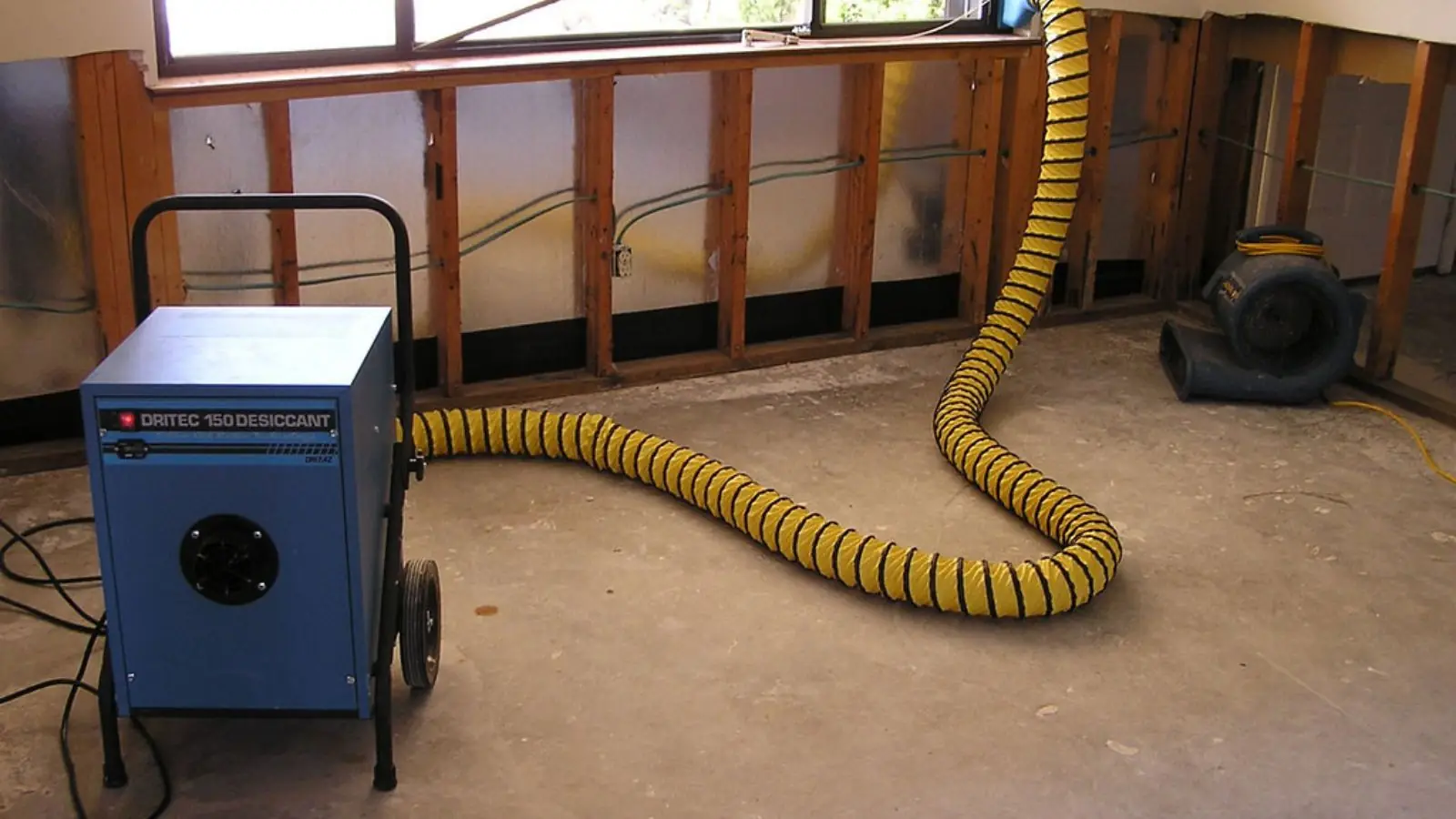
Structural drying services remove water from the parts of a house you cannot see, like wall cavities, subfloors, framing and the layers under flooring. Mopping and a box fan dry the surface, but the lumber, insulation and drywall behind it can stay wet for weeks.
This guide explains what the equipment does, how crews map moisture, and how they decide a building is actually dry. No one can honestly promise a day count before measuring, so you will see what drives the timeline instead.
What structural drying means
Structural drying is the controlled removal of moisture from building materials after a water loss. It follows the first response, where standing water is extracted and the source is stopped. The work happens in the walls, floors and ceilings, and it continues until readings match what a normal dry home looks like.
Drying goes best when it begins inside the EPA's 24 to 48 hour mold-prevention window, and crews then track readings until the framing hits its target. Surface-dry is not the finish line. Wood framing, concrete slabs and thick insulation release water slowly into the air, and the equipment has to keep up with that release.
Moisture mapping: finding where the water went
The first job on site is a walk-through with meters and an infrared camera, and no air mover goes down until the wet zones are mapped. The camera shows temperature differences that often trace wet areas behind paint, and the meter confirms the number. The result is a moisture map, a drawing or log of each room with readings at fixed points.
Water travels. It wicks up drywall, runs along joists and pools under cabinets, so a leak in a kitchen can leave wet material in the next room. A good map includes areas that look dry so there is a baseline and nothing is missed.
Why a dry reference reading matters
Materials differ, so a single magic number does not exist. Crews take a reading from an unaffected wall, floor or stud of the same material and use it as the dry goal. That keeps the drying target honest for your house instead of a generic chart.
The equipment and what each piece does
Air movers
High-velocity fans that push air across wet surfaces so water evaporates into the room. Placement matters more than quantity, and they are angled along walls and under cabinets.
LGR dehumidifiers
Low grain refrigerant units that pull evaporated moisture out of the air. Without them the water just recirculates, and the room feels like a sauna.
Injection and mat systems
Hoses and drying mats move dry air into wall cavities or through a wood floor so material dries from the inside.
Extraction and air scrubbers
Truck-mounted or portable extraction units remove bulk water, while HEPA air scrubbers clean the air if drywall or insulation has been opened.
Closed doors and windows matter because the dehumidifier works best when the room is a sealed loop. Open windows let humid outdoor air in, and the machines struggle against it. The crew will explain which zones to keep closed.
If the water was contaminated or large in volume, drying begins after emergency water removal has pulled out standing water and any unsalvageable materials.
Typical drying monitoring, step by step
Drying is a process, not a single visit. The crew sets equipment, returns on a schedule to read the meters, changes equipment placement and removes units as zones reach goal. The table shows the usual rhythm, though real timelines depend on the water category, the materials and the weather.
| Stage | What happens | What you may notice |
|---|---|---|
| Setup | Extraction, moisture map, equipment placed | Loud fans and humid air at first |
| Early monitoring | Daily readings, equipment shifted to wet spots | Crew visits most days |
| Midpoint | Wet insulation or trim removed if it will not dry | Small openings in walls or toe kicks |
| Final readings | Meters compared against dry reference | Fans removed zone by zone |
| Sign-off | Documented readings handed to you | Rebuild planning can start |
Many homes need several days of drying, and larger or contaminated losses can take longer. Anyone quoting an exact number before measuring is guessing. Ask for the daily logs, because they are what you will hand to an insurer.
Drying and prevention overlap with water mitigation, which covers the first 24 to 72 hours of limiting the spread, while structural drying is the sustained follow-through.
Signs the drying is not finished
- A musty smell comes back after the equipment is removed.
- Baseboards, cabinet kicks or flooring seams show new swelling or discoloration.
- Paint bubbles or wallpaper edges lift on a wall that was wet.
- Windows fog or condensation appears on cool surfaces inside.
- A moisture meter still reads higher than the dry reference reading.
If any of those show up, call the crew and ask for another reading. Drying that stops too early can leave pockets of moisture in framing. If mold appears, the response moves into mold remediation, and S520 is the published industry standard for that work.
What you can do during drying
- Keep the equipment running and do not turn it off to save noise, because a stop restarts the clock.
- Keep exterior doors and windows closed in the drying zones unless the crew says otherwise.
- Do not move or unplug machines. Ask the crew if a cord is in the way.
- Keep children and pets away from the equipment and the open wall cavities.
- Photograph the setup and ask for copies of the moisture logs.
- Do not paint, carpet or cover anything until readings are signed off.
Not sure whether your walls are still wet?
Call (626) 879-0276 and ask about a moisture assessment, with 24/7 dispatch when you need it.
Safety while drying equipment runs
Drying equipment is powerful and runs around the clock.
- Do not unplug, move or switch off air movers or dehumidifiers on your own.
- Keep cords out of any standing water and do not add extension cords.
- Keep children and pets away from the equipment and the wet area.
- Do not close off drying cavities or seal vents without asking your technician.
- Call (626) 879-0276 if equipment trips a breaker, smells hot or makes a new noise.
Cost factors for structural drying
Pricing reflects the work, not a flat rate. Drying invoices depend on category of water, floor area affected, what the building is made of, how many days and machines the job needs, and whether rebuilding follows. If you want a drying plan with the price attached before equipment is set up, call (626) 879-0276.
Drying documentation can help an insurance claim, but coverage depends on your policy. Many policies respond to a burst line but not to a leak that went on for months, and floods are normally a separate product, so your insurer can tell you where drying costs land.
Structural drying in La Puente
The city spans roughly 3.48 square miles of mostly residential streets and became a city in 1956, so most drying jobs are in houses and small apartment buildings. Because the city is compact and our base is at 1801 N Hacienda Blvd, return visits for daily moisture readings are practical, which matters since drying depends on repeated checks. Ask whichever company you hire how often it will come back to read the meters.
Baldwin Park's city documents say most of its buildings were constructed before 1960. Older construction can mean older wall materials and framing, so a thorough moisture map matters more than a one-size drying plan. Ask the Baldwin Park Building Division, at 14403 E. Pacific Avenue, whether the drywall or flooring replacement that follows drying needs a permit.
Frequently asked questions
How long does structural drying take?
Duration depends on water category, materials and loss size, which is why crews measure it day by day instead of quoting a fixed number. Crews keep equipment running and take daily readings until the materials match a dry reference reading.
What is the difference between water extraction and structural drying?
Extraction removes standing and bulk water, usually with truck-mounted or portable units. Structural drying removes the moisture left in framing, subfloors and drywall using air movers and dehumidifiers.
Can I use box fans and a home dehumidifier instead?
They help with small, clean-water spills, but they rarely dry wall cavities or subfloors. Without moisture readings you cannot tell when drying is done, which is how hidden mold starts.
Will my power bill go up during drying?
Air movers and dehumidifiers run continuously, so electricity use rises while they operate. Ask your insurer how that is handled, and ask the crew how many machines are planned.
Do older Baldwin Park and Hacienda Heights homes dry differently?
Material and construction type matter, so older homes can behave differently from newer ones, and moisture mapping shows the difference. See Baldwin Park water damage restoration or Hacienda Heights water damage restoration for local coverage.