
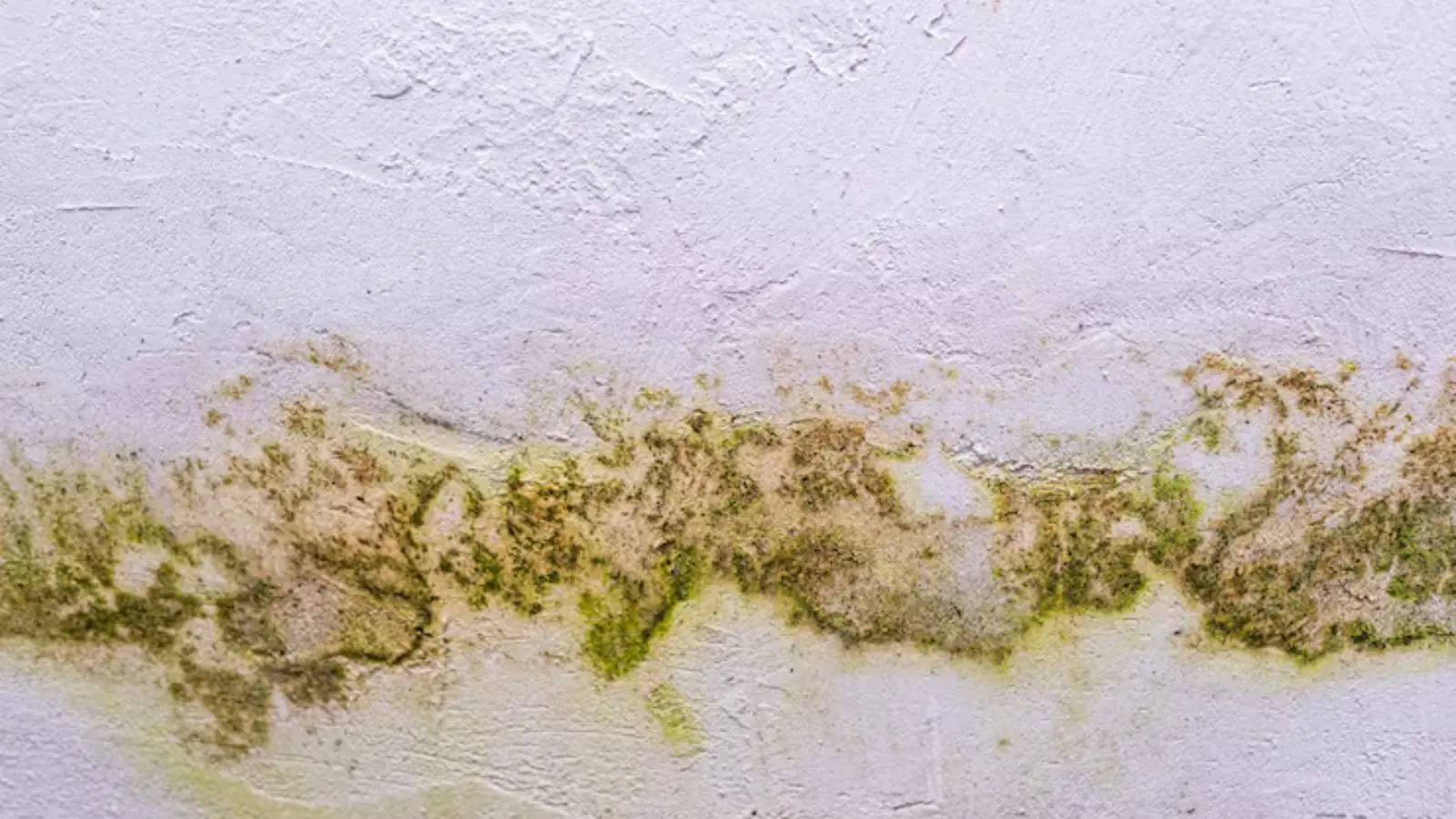
Mold vs mildew is one of those questions where the words overlap in everyday talk, and a stain on a wall is often neither. Dirt, soot and the white crust on masonry can look a lot like early growth from across the room.
This guide shows how to tell the four apart with a damp cloth and a flashlight, and then what to do about each. Every one of them depends on dampness, so tracing the water source is the final step no matter which you have.
Mold and mildew, in plain words
Mildew is generally used for flat, powdery or downy surface growth, usually gray or white, that shows up on shower walls, window sills and damp fabric. Mold is the broader word, covering fuzzy, speckled or slimy growth in green, black, brown or other colors, often with a musty smell. In a home, both are fungi that need moisture and something organic to feed on.
For a homeowner the distinction matters less than the cause. Treat surface mildew as an early warning that a spot stays damp. If it spreads or has soaked into drywall, wood or ceiling tile, handle it as mold.
Four things that look alike
| What it is | What it looks like | Quick check | What to do |
|---|---|---|---|
| Mildew | Flat, powdery or thin, gray or white, mostly on hard surfaces | Wipes off with detergent but returns if the area stays damp | Scrub with detergent and water, dry fully, improve ventilation |
| Mold | Fuzzy, speckled or slimy, green, black or brown, often musty | Smears when wiped, may have spread into drywall or wood | Fix the moisture, clean small hard-surface patches, remove soaked materials |
| Dirt or soot | Gray or black film, even and dry, often near vents, corners or candles | Wipes away cleanly with no smell | Wash with ordinary cleaner, check for air leaks if it keeps returning |
| Efflorescence | White, chalky or crystalline crust on brick, block, concrete or stucco | Dry, brushes off as powder, no musty smell | Dry-brush, then find the water moving through the wall |
None of these checks is a lab result, so treat them as a first sort. If you cannot tell and the area is damp, a moisture meter reading is often more telling than the stain itself.
A simple way to test a spot yourself
Look at the surface
Use a flashlight at a low angle. Fuzzy texture suggests mold, a flat film suggests mildew or dirt and white crystals on masonry suggest efflorescence.
Smell the area
A musty, earthy smell points to growth. Dirt and efflorescence usually have no odor.
Wipe a small patch
Use a damp cloth. Dirt lifts off cleanly, efflorescence turns to a paste or dissolves and mold smears or leaves a stain.
Check for moisture
A moisture meter reading above normal for the material means water is present, which is what growth needs.
What to do about mildew
Surface mildew on a tile wall or window sill is a cleaning job. Wear gloves, scrub with detergent and water, rinse, and dry the surface with a towel and a fan. Then run the bathroom exhaust fan during and after showers so the surface does not stay wet.
If it keeps coming back within weeks, the moisture is not under control. Look at caulk joints, a slow drip, or poor airflow behind a shower curtain.
What to do about mold
For small spots, under about 10 square feet, the EPA considers home cleanup reasonable. Its advice then adds a condition: scrub the growth off and repair whatever caused the wetness. Soaked drywall, insulation and carpet pad generally come out rather than getting scrubbed.
For larger areas, repeat growth or anything tied to sewage or contaminated water, bring in professionals. Their crews wall off the space with poly, keep it under negative pressure with HEPA scrubbers running and work from the ANSI/IICRC S520 playbook. See the mold remediation page for the step-by-step version, and put the S520 question to every contractor you interview.
Cannot tell whether it is mold?
Describe the color, texture and location to a dispatcher at (626) 879-0276, and you will get a straight answer on the next move.
What to do about dirt and efflorescence
Dirt and soot come off with ordinary cleaner. If dark streaks appear around vents or along the edge of a ceiling, it may be airflow carrying dust, so consider a filter change before assuming a leak.
Efflorescence is mineral salts left behind when water moves through masonry and evaporates. Brush it off dry, then look for the water source, such as a leaking gutter, irrigation spray against the wall or wet soil against the foundation. If moisture has reached drywall or framing, our water damage cleanup team can help dry and clean it.
A short checklist before you scrub
- Photograph the spot before you touch it.
- Note whether it smells musty.
- Do the damp-cloth wipe on a small patch.
- Measure or estimate the area against the 10 square foot guide.
- Look for the water source above, behind and beside the spot.
- Dry the area completely after cleaning, and recheck in a week.
Mold, mildew and look-alikes in La Puente
Hacienda Heights has an owner-occupied rate of 75.5 percent, according to the 2020 to 2024 ACS, which means most households there make their own repair calls. If you own, a spot that fails the wipe test is yours to trace and fix. Take photos and keep receipts in case an insurance question comes up later.
Baldwin Park's Health and Sustainability Element says most of the city's buildings were constructed before 1960. Older stucco, block and plaster have had many cycles of wetting and drying, so white crust on a garage wall or old stains near a window may be historic moisture, not new growth. A moisture meter helps you tell the difference.
Our crews, dispatched from La Puente, work in Hacienda Heights and Baldwin Park. Whichever side of the line your spot falls on, the rule is the same: find the water.
Frequently asked questions
What is the difference between mold and mildew?
Mildew usually means flat, powdery surface growth in white or gray, while mold is the broader term for fuzzy or slimy growth in many colors, often with a musty smell. Both need moisture, so the cause matters more than the label.
How can you tell if it is mold or dirt?
Dirt wipes away cleanly, is dry and has no smell. Mold smears, may feel damp and often smells musty. A moisture meter reading above normal points toward mold.
What is the white powder on my wall or garage block?
It is likely efflorescence, mineral salts left when water passes through masonry and evaporates. It brushes off dry and has no musty smell. Its presence means water is moving through the wall.
Does mildew need professional removal?
Usually not. Surface mildew on hard surfaces can be cleaned with detergent and water. Call a professional if it keeps returning, covers a large area or sits on soaked materials.
Should I worry about white crust on a Baldwin Park garage wall?
It is commonly efflorescence, not mold, but it means water is reaching the block. Brush it off, then check gutters, irrigation spray and soil against the wall.