
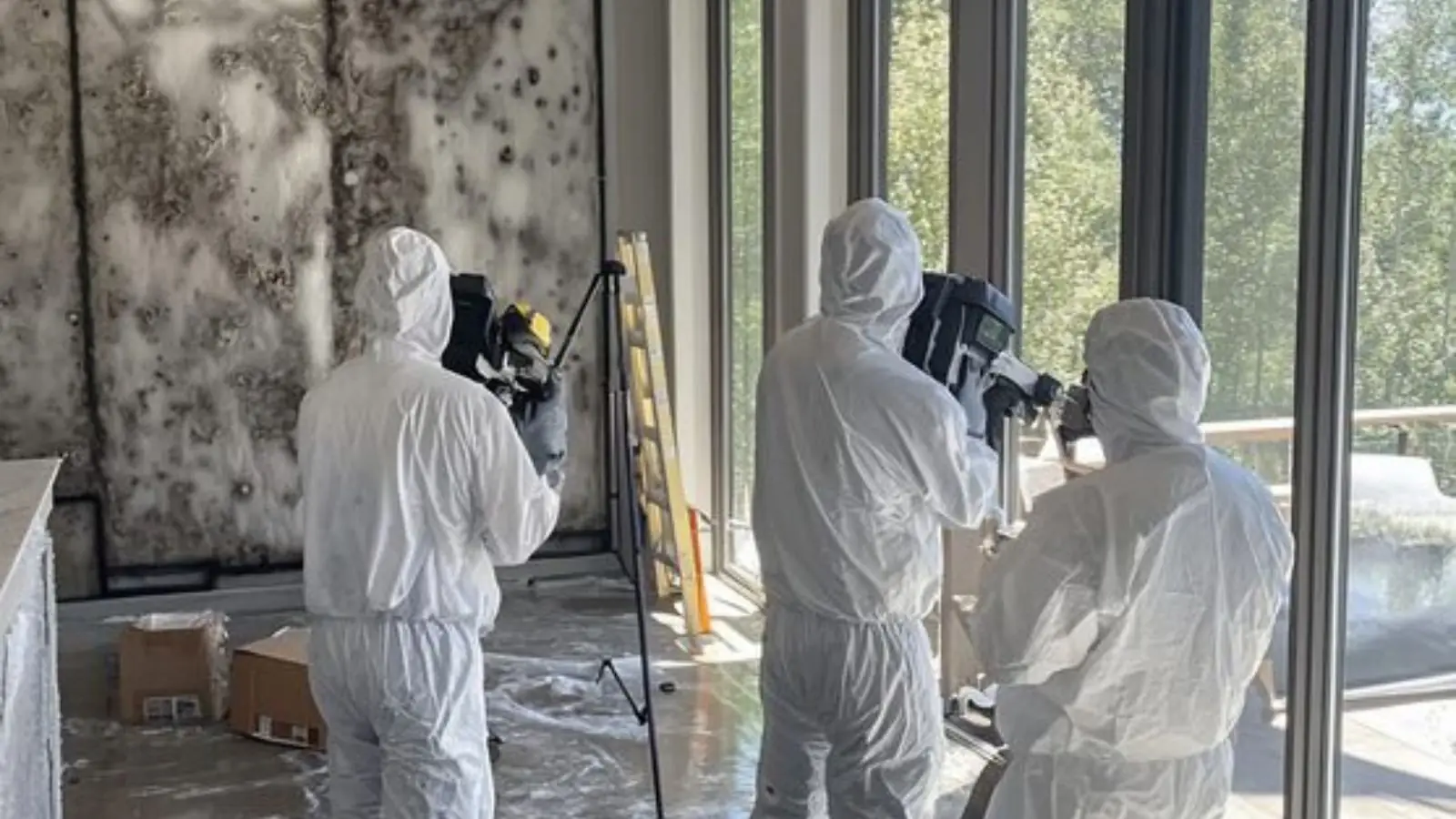
A buyer's inspector points at a stain, or a lender asks a question, and suddenly mold clearance testing for a home sale in La Puente is on the table. The deal can hinge on one document that shows the problem was found, fixed and checked.
This guide explains who does the testing, why it is kept apart from the company that removes the mold, and what to ask your lender or agent before you spend money. It also lays out the order of events so nothing gets done twice.
Inspection, remediation and clearance are three separate jobs
A mold inspection finds and documents the problem. Visible growth is the starting point. After that the inspector reads a moisture meter and scans with a thermal camera, which reveal soaked drywall hidden under paint or flooring. The output is a written report that says where the moisture is, how much material is affected and what likely caused it.
Remediation is the physical work. The work area gets sealed off with poly sheeting and pulled under negative pressure while HEPA scrubbers run. Damaged material is cut out or cleaned, then air movers and LGR dehumidifiers bring the framing back to normal moisture. S520, issued by ANSI and the IICRC, is the written industry standard here. Before hiring, ask the company directly if its crews follow it. Our mold remediation page covers how that work is scoped.
Clearance, often called post-remediation verification, comes last. A tester looks at the cleaned area and may collect air or surface samples to see whether conditions match what was agreed before the work began. This is the document a buyer, agent or lender can actually read.
Why the tester should not be the remediation company
If the same company removes the mold and then signs off on its own work, the report is grading its own homework. An independent tester has no stake in how much work gets done and no reason to pass or fail a job for any reason except the results. That separation is what gives the paper its weight with a third party.
In practice, line up the tester first or at least separately. Give the tester the remediation scope, then agree in writing what counts as cleared before anyone sets up containment. Ask whether your state licenses mold assessors or mold work, since requirements differ from state to state.
| Stage | Who does it | What you end up with |
|---|---|---|
| Inspection | Independent inspector or assessor | Written findings, photos, moisture readings, likely cause |
| Remediation | Licensed and insured crew working to S520 practice | Contained removal, HEPA cleaning, drying records, scope and price in writing |
| Clearance | Independent tester, not the crew | Visual check, any sample results, a report for your agent or lender |
The order of events when a sale or loan is waiting
Doing these steps out of order is the most common way to pay twice. A clearance visit on a wall that is still damp, or remediation before the leak is fixed, gets you nothing a buyer will accept.
- Ask your agent or lender what document they want, in what form and from whom, before you hire anyone.
- Have an independent inspector document the growth, the moisture readings and the probable source.
- Fix the water problem first, whether that is a leaking supply line, a clogged AC condensate line, a roof leak or a failed caulk joint.
- Get the remediation scope in writing, including containment, HEPA scrubbing, which materials come out and how drying will be checked.
- Let the crew finish and dry the area before anyone schedules clearance.
- Book the independent tester, keep the full report with photos and any lab pages, and hand copies to your agent.
- Ask your lender or agent whether the report meets their requirement, and get that answer before the closing date gets close.
Need the mold and the moisture dealt with first?
Dial (626) 879-0276 and a dispatcher will lay out what the job covers and what drives the price, before anyone picks up a tool.
What clearance testing can and cannot tell you
An air sample is a snapshot. It reflects that hour, that room, the ventilation and what is blowing in from outside, which is why a good tester pairs any sample with a visual inspection and moisture readings. A lab number alone is only one piece of the picture.
Because the EPA acknowledges that no indoor space can be made free of every spore, a clearance report cannot guarantee mold stays away for good. What it can show is that the affected area was cleaned, the materials are dry and conditions look normal compared with the rest of the home. Whether a lender, buyer or insurer accepts a particular report is their decision alone, and no contractor can promise it.
The same limit applies to wording. Be wary of anyone who says a certificate guarantees a closing. Ask the people who will read the report, and ask early.
Dry first, then test
EPA guidance is two-part. Get wet materials dry in one to two days, and where mold has already taken hold, clean it and repair whatever is letting water in. Testing a structure that is still wet only records a moment before the next flare of growth. Moisture meter readings on studs and drywall, taken before walls are closed up, are cheap insurance.
If drywall, insulation or flooring came out, you will need a rebuild before listing the house. Our water damage repair page explains how that stage follows drying, and cleanup of wet debris is covered under water damage cleanup.
Questions to put to your agent and your lender
- What written proof, if any, does the buyer's side or the loan require after a mold finding?
- Do they want an independent post-remediation report, and from what kind of company?
- Is there a deadline between the report date and closing?
- What must I disclose to buyers about past water damage or mold, and who advises me on that?
- Does my insurance policy cover any part of the cleanup, and what must I document first?
Mold clearance and home sales in La Puente
In its draft housing element for 2021 to 2029, West Covina reports that over two-thirds of its homes predate 1980 and roughly 74 percent are detached single-family houses. For a seller in West Covina, that means original roofs, older shutoff valves and long-ago plumbing repairs are all fair game for a buyer's inspector. Look under sinks and around attic penetrations before the inspector does.
The California Contractors State License Board states that any contractor with employees must hold a valid license regardless of project size or cost, and that work needing a permit always falls under licensing. Before you hire anyone for remediation ahead of a sale, ask to see the license and check it with the CSLB. A report is only as useful as the work behind it.
Crews dispatched from La Puente also work across Hacienda Heights, and the same order of operations applies there. For a sale inside La Puente, call the city's Building & Safety Division and ask whether the repairs require a permit. Permit applicants there must hold a city business license and show their state contractor card.
Frequently asked questions
Do you need mold clearance to sell a house?
There is no single rule that applies to every sale. What you need depends on your buyer, their lender, your agent and what has to be disclosed about past water damage. Ask your agent first, and ask your lender what they will accept.
Who should do mold clearance testing?
An independent inspector or assessor who is not the remediation company. That separation keeps the sign-off honest. Ask whether your state licenses mold assessors before you book.
Will a lender accept a clearance report?
No one can promise that. Each lender, buyer and insurer sets its own requirements. Ask your lender or agent what they want in writing before you pay for testing.
Should I test before or after the mold is removed?
Inspect first so the scope is documented, then remediate, then clear. Clearance on an area that is still wet or still under repair does not tell a buyer much.
Does a permit apply to mold cleanup in La Puente?
The city's Building & Safety Division handles permits, and its page does not describe a specific mold or water-damage permit process. Ask the city building department about your scope. Anyone applying for a permit in the city must hold a city business license and supply a copy of their state contractor card.