
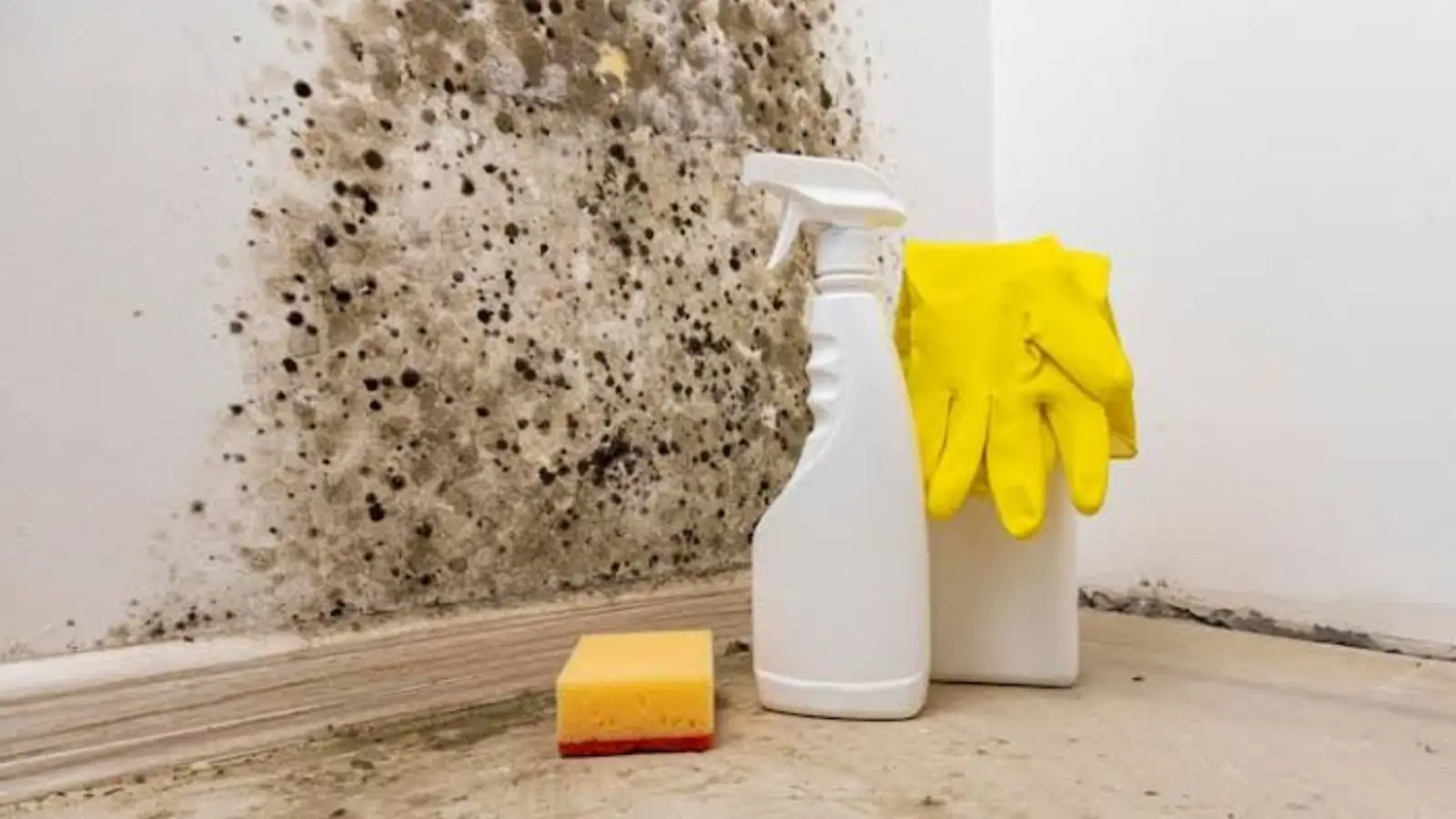
Dark spots on a bathroom ceiling or a closet wall send people searching for how to get rid of black mold. The honest answer starts with the water, because cleaning the surface without fixing the moisture just sets up a repeat.
Below you will find what the dark color does and does not tell you, how to size up the job, a careful method for small areas and what professional containment looks like. Anything involving sewage or large areas is where a crew should take over.
What "black mold" actually means
People use "black mold" for any dark growth on drywall, grout, wood or caulk. Color alone does not identify what is growing, and many different molds look dark, olive or gray. You do not need to name the species to decide what to do next, since the cleanup approach depends on how much material is affected and what is wet.
What matters is moisture. Mold needs water and something organic to feed on, such as drywall paper, wood or dust. Take away the water and it stops spreading, which is why plumbing, roof and AC condensate leaks sit at the top of the list to check.
Small area or professional job?
A patch about 3 feet by 3 feet, or under 10 square feet, is the EPA's rough ceiling for do-it-yourself cleanup. Past that size, or when water damage is widespread or sewage is involved, the agency points to experienced help. Use the framework below as a starting point.
Likely a small job
A patch under about 10 square feet on a hard surface such as tile, painted drywall or a window sill, caused by a leak that has already been fixed and dried.
Call a professional
Growth over about 10 square feet, wet insulation or drywall, signs behind walls, repeat growth after cleaning or a musty smell with no visible source.
Call a professional now
Any sewage or contaminated water, growth inside HVAC ducting, or a home that has had recent flooding.
Cleaning a small area step by step
Before touching anything, find and stop the water. Fix the leaking trap, clear the condensate line, patch the roof, or run a dehumidifier in a humid bathroom. Cleaning before the fix is the single most common reason a patch comes back.
Protect yourself and the room
Wear gloves, eye protection and an N95 respirator. Close the door, open a window if you can, and never mix cleaning products. Bleach and ammonia together release dangerous fumes.
Scrub hard surfaces
Use detergent and water on tile, grout, sealed wood and painted drywall. Scrub until the surface looks clean, wipe with a clean damp cloth and dry it completely with towels and a fan.
Remove soft, soaked materials
Ceiling tile, wet insulation, carpet pad and drywall that stayed damp usually have to be cut out and bagged, not scrubbed. Double-bag the debris before carrying it through the house.
Dry and recheck
Run a fan for a day or two and recheck the spot with a moisture meter if you have one. A reading that stays high means water is still getting in.
What professional black mold cleanup looks like
When the job is larger, the work is built around containment so spores are not carried to the rest of the house. Crews seal the area with plastic sheeting, set up negative air with HEPA air scrubbers, remove affected materials in sealed bags and HEPA-vacuum and damp-wipe the surfaces left behind. The written benchmark behind this process is ANSI/IICRC S520. A reasonable screening question for any contractor is whether they build their jobs around it.
Drying follows, with air movers and LGR dehumidifiers running until moisture meters show the framing back at normal readings. Only then does rebuilding start. Our mold remediation page walks through scope and sequence, and the leftover wet debris falls under water damage cleanup.
Dark mold bigger than a doormat?
Phone (626) 879-0276 to hear how the size of the growth and the materials involved shape the scope and the quote.
Fix the moisture or nothing else holds
Wiping away black growth without stopping the moisture feeding it accomplishes little, a point the EPA makes directly. It also notes that you cannot remove every mold spore from a home, so the goal is to keep surfaces dry enough that growth does not restart. No crew can honestly promise that mold will not return, and you should be cautious of anyone who does.
- Run bathroom exhaust fans during and 20 minutes after showers.
- Fix drips under sinks and around toilets the week you find them.
- Clear AC condensate drain lines before summer.
- Dry any wet area within 24 to 48 hours.
- Keep furniture a few inches off exterior walls so air can move.
- Check attic ceilings after rain for stains or damp insulation.
Insurance and paperwork
Policies tend to separate a sudden failure from a long-running seep, which means mold after a slow drip can be handled differently from mold after a pipe burst. Photograph the growth and the source before you clean, and keep receipts. Then check your policy or ask your insurer how it treats mold and water damage, and ask before tearing out large sections.
Black mold cleanup in La Puente
The City of Baldwin Park's planning documents say the area historically receives 14 to 18 inches of rain a year, with wider swings between very wet and very dry years expected. A dry stretch followed by a wet winter can show up as new stains on ceilings and wall corners. After a heavy storm, check the attic and exterior walls before spots turn into patches.
In Baldwin Park about 57.7 percent of homes are lived in by their owners, leaving roughly 42 percent of households as renters. If you rent, report visible growth and its source to your landlord in writing and keep photos. Do not tear out walls without permission, because the lease and the cause of the moisture affect who is responsible.
Our crews, dispatched from La Puente, cover Baldwin Park and West Covina. If you are not sure whether your patch is a DIY job, call and we can talk through it.
Frequently asked questions
What kills black mold?
On hard surfaces, detergent and water with a thorough scrub and complete drying removes visible growth. Porous materials like soaked drywall and insulation usually have to be removed. Whatever you use, fixing the moisture is what keeps it from coming back.
Can I get rid of black mold myself?
Small, dry-surface patches are within homeowner range per the EPA. Sewage, widespread dampness or anything bigger than that should go to professionals.
Will black mold come back after cleaning?
It can if moisture remains, and no one can promise mold will never return. Dry the area, fix the leak and watch the spot over the following weeks.
Do I need to test black mold before removing it?
Not to decide whether to clean. Color does not identify mold, and the response depends on how much is growing and what is wet. A written inspection and later independent clearance can be useful if a sale or loan depends on it.
I rent in Baldwin Park. Who handles black mold in my unit?
That depends on your lease and the cause of the moisture. Report it to your landlord in writing with photos, and avoid removing walls on your own. For legal questions, ask a tenant resource or attorney.