
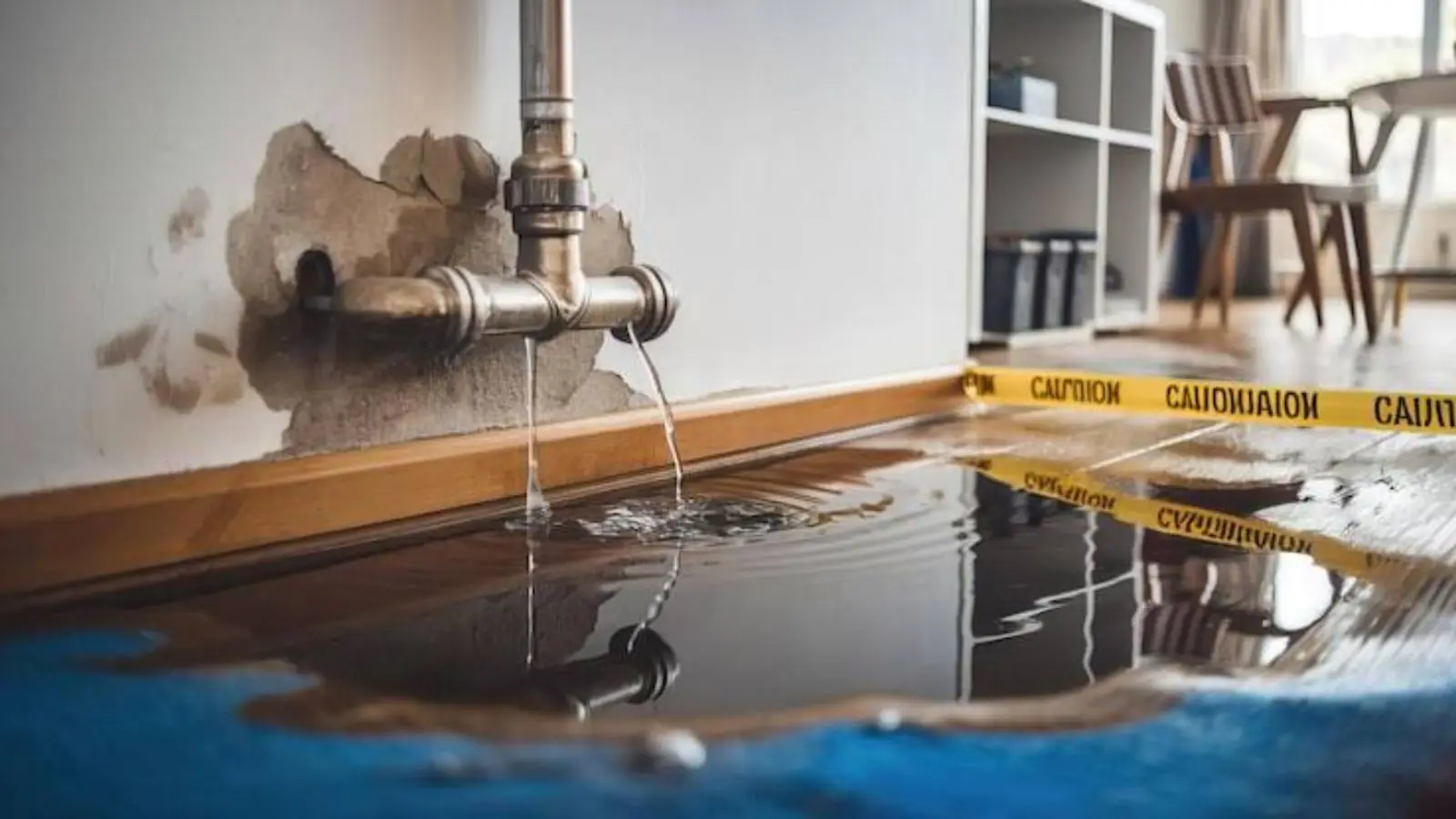
A burst pipe sends gallons into walls and floors every minute, so the first 30 minutes matter more than anything that follows. Your job is simple: stop the water, make the house safe, record what happened and call for help. Everything else can wait.
If water is already standing or spreading, call our 24/7 line at (626) 879-0276 while you work through this list, and read about emergency water removal to see what crews do on arrival.
Minutes 0 to 5: stop the water
Find the main shutoff valve. In many Southern California homes it sits on an exterior wall near the front or side of the house, or at the water meter at the street. Turn a gate valve clockwise until it stops, and turn a lever handle a quarter turn so it sits crosswise to the pipe.
If you cannot find or turn the valve, shut the fixture valve under a sink or toilet when the break is there. Then open a faucet at the lowest point in the house to drain remaining pressure from the lines. Do not wait to look for a plumber before closing the valve.
Water heaters feed many bursts. If the break is near the heater, also turn off its gas or power supply before the tank empties, since a dry element or burner can be damaged.
Minutes 5 to 10: make power safe
Water and electricity are a dangerous pair. When a burst line has soaked outlets, cords or the breaker box, flipping the breaker for that room helps, but a dry floor under your feet and a dry box in front of you come first. Standing in a puddle to reach the switch is the wrong trade. If the box or the floor near it is wet, back away and phone your electric utility or 911.
Electrical and sewage warning
Do not enter standing water if anything electrical may be live.
- Do not touch outlets, switches or appliances while standing in water
- Do not use a wet vacuum on a flooded floor with power still on
- Stay away from sagging ceilings, which can drop water and board
- Send kids and animals to a dry room if the water has touched anything beyond a clean supply line
- Call 911 or the utility if you smell gas or see sparks
Minutes 10 to 20: document before you move things
Take photos and a slow video of every wet area before you start cleanup. Capture the broken pipe, the water line on walls, wet furniture and any damaged belongings. The state insurance department's consumer guidance points to photos of the damage and saved receipts for sensible protective spending, such as a plumber's emergency visit.
Then limit the loss. Lift small furniture onto blocks or foil, remove rugs, and move electronics and papers to a dry room. Mop or towel what you safely can, but do not start tearing out walls.
- Photograph the source, the water line and every wet room.
- Move valuables, rugs and electronics to dry areas.
- Place foil or plastic under furniture legs that must stay.
- Open cabinet doors under affected sinks to let air in.
- Write down the time the break was found and the time the water was shut off.
Minutes 20 to 30: make the calls
Call a plumber to repair or replace the broken pipe, and call a restoration company to remove water and start drying. Report the loss to your insurer or agent and ask what they need from you. Do not sign anything that you have not read.
Pipe burst and water spreading?
The dispatch line at (626) 879-0276 never closes. Tell the person who answers what burst and where, and you will get instructions for the minutes before a crew can get there.
Water that is not dried within 24 to 48 hours can lead to mold, according to EPA. That deadline is why crews bring air movers, LGR dehumidifiers and moisture meters as soon as they can. You can read how that stage works in the page on water mitigation.
What to expect from the crew
A crew starts by mapping where the water went. Thermal imaging cameras and moisture meters find wetness behind walls and under floors that your eyes cannot see. Portable extraction units pull standing water from carpet and hard floors, and wet baseboards may be removed so walls can dry.
Then come the drying machines. Air movers push dry air across surfaces and LGR dehumidifiers pull moisture out of the room, while readings are repeated each visit until materials are back to normal. Drying typically takes several days, and the crew should explain scope and price before work starts.
Quick table: who to call for what
| Problem | Who to call | Why |
|---|---|---|
| Active water and no shutoff | Plumber or water provider | The valve or line must be closed |
| Gas smell, sparks, wet panel | 911 or the utility | Immediate safety risk |
| Water on floors and in walls | Restoration company | Removal and drying start the clock on mold risk |
| Damage to belongings and structure | Your insurer | Claim reporting and requirements |
| Pipe repair | Licensed plumber | Restoration crews are not plumbers |
Crews dispatched from La Puente also respond in Hacienda Heights and Baldwin Park, and arrival depends on conditions at the time of your call.
Burst pipes and your water provider in La Puente
Two retailers supply La Puente water. The first is La Puente Valley County Water District, a smaller utility that lists about 9,000 consumers. The other is Suburban Water Systems, which covers other parts of La Puente and neighboring cities. Ask your water provider which one serves your address, so you know whom to call if the street shutoff or meter is involved.
The meter and the line up to it are generally the utility's, while the pipes inside your property are yours. If you cannot close your own valve, call the provider rather than forcing an old one. A valve that breaks adds a second leak to the first.
Suburban Water Systems lists a service area split into two parts by the La Puente Hills. That is a reason to confirm your provider by looking at your own bill. Keep that bill with your insurance papers.
Frequently asked questions
What is the first thing to do when a pipe bursts?
Shut off the main water valve to stop the flow. Then open a low faucet to drain pressure, make the power safe and photograph the damage. Call for help once the water is stopped.
Should I turn off the electricity when a pipe bursts?
Yes for the wet room, provided the breaker box is dry and reachable from a dry spot. A damp floor around the box means stay back and call the utility or 911. Never touch electrical items in standing water.
Does homeowners insurance cover a burst pipe?
Sudden and accidental pipe failures are often covered, but policies differ on details. Ask your insurer what is included and keep receipts for protecting the property. Do not rely on any contractor to tell you how a claim will turn out.
How fast does water damage turn into mold?
EPA guidance sets a drying window of one to two days before mold becomes a worry. That window is why quick drying matters after a burst pipe. Hidden wetness behind walls is found with moisture meters.
Who shuts off the water if my valve will not turn in La Puente?
Call your water provider, which is either La Puente Valley County Water District or Suburban Water Systems depending on your address. A plumber can also replace a stuck valve. Avoid forcing it.